17 Princess-Themed Cakes and Treats Worth Trying
Choosing the right princess cake or treat often comes down to matching your actual baking skill and available time to the visual result you’re hoping for, rather than attempting something well beyond your current comfort level.
Here are 17 ideas worth considering, arranged toward the one that tends to deliver the biggest visual impact relative to the actual effort involved. Every one of these is achievable at home with basic baking equipment. While the cake bakes and cools, a few DIY princess party crafts give kids something hands-on to do in the meantime.
17. Classic Tiered Princess Cake
A simple two or three-tier cake, decorated with basic piping and a small crown topper, remains one of the most requested princess party centerpieces. This option works well even for bakers with modest experience.
Use a cake dowel system for any tiered design, this small structural step prevents the very common problem of a cake settling or leaning during the party.
16. Crown-Topped Cupcake Tower
A tower of simple cupcakes, each topped with a small crown pick, creates a genuinely impressive display without requiring the structural skill of an actual tiered cake. This option is also considerably easier to serve to a large group.
Rent or purchase an inexpensive cupcake stand specifically, this single purchase makes the display look considerably more polished for very little cost.
15. Ombre Layer Cake
A cake with layers that gradually shift from a deep to a light shade of the same color creates a genuinely striking visual effect once sliced. This technique is more about careful color mixing than advanced decorating skill.
Mix each layer’s color slightly lighter than the one before it, small, consistent steps between shades create the smoothest, most professional-looking gradient.
14. Jeweled Fondant Cake
A simple cake covered in fondant and decorated with candy or fondant “jewels” creates an actually regal look without requiring advanced piping technique. This option works well for bakers newer to fondant specifically.
Practice working with fondant on a small test batch before the actual cake, this small step builds real confidence with a material that behaves differently from buttercream.
13. Rainbow Surprise Inside Cake
A cake that looks simple from the outside but reveals colorful rainbow layers once sliced creates a really delightful surprise moment during the party. This technique requires more planning than skill.
Bake and cool each colored layer completely before stacking, rushing this step is the most common reason this style of cake doesn’t turn out as clean as hoped.
12. Simple Buttercream Rosette Cake
A cake covered entirely in piped buttercream rosettes creates an elegant, textured look that’s more forgiving of small imperfections than smooth fondant. This technique is quite a bit more beginner-friendly than it initially appears.
Use a consistent piping tip and pressure throughout, this consistency is what makes individually imperfect rosettes still look cohesive as a whole.
11. Castle Silhouette Cake
A cake shaped or decorated to resemble a simple castle silhouette creates a truly memorable centerpiece, though this option does require more structural planning than a standard round or tiered cake.
Consider using a sheet cake cut into a castle shape rather than attempting a fully three-dimensional structure, this approach delivers real visual impact with quite a bit less risk of structural problems.
10. Watercolor Effect Cake
A cake decorated with a soft, blended, watercolor-style buttercream finish creates an actually artistic look that’s more about gentle blending technique than precision. This style is forgiving of small inconsistencies in a way more structured designs aren’t.
Work with slightly thinned buttercream for this technique specifically, this consistency blends a good deal more smoothly than a thicker, standard buttercream.
9. Princess Silhouette Cookies
Simple sugar cookies, cut into a generic crown or wand silhouette and decorated with royal icing, make a charming treat that doubles as a party favor. This project is accessible even for less experienced bakers.
Let royal icing details set completely between color layers, rushing this step is the most common cause of colors bleeding together unintentionally.
8. Sparkle Drip Cake
A cake finished with a shimmering drip effect and edible glitter creates an eye-catching, trend-forward look that photographs beautifully. This technique is more about achieving the right drip consistency than advanced skill.
Test your drip consistency on the side of a glass before applying it to the actual cake, this small test prevents a drip that’s either too thick or runs too far down the cake.
7. Macaron Tower
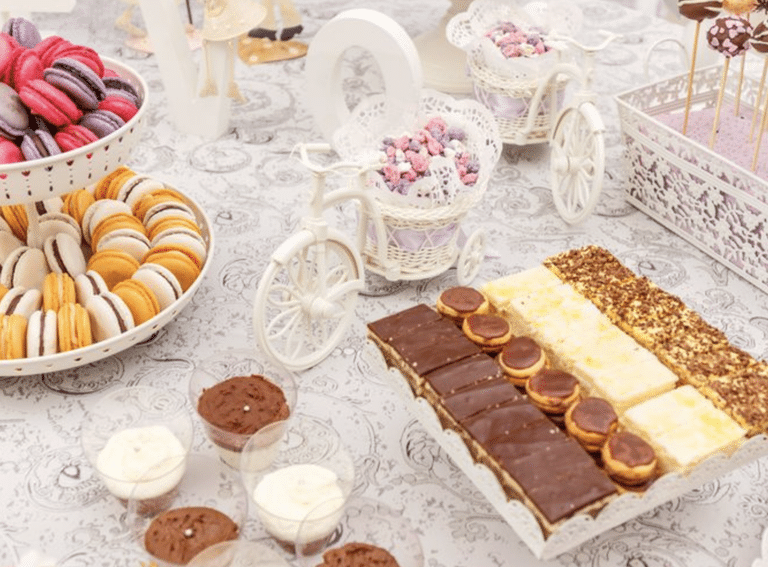
A tower of colorful macarons, arranged on a cone-shaped stand, creates an elegant, sophisticated dessert display, though macarons themselves have a real learning curve worth practicing before the actual party.
Consider purchasing macarons rather than making them from scratch if this is your first attempt at a princess party dessert table, this is a completely reasonable choice that still delivers real visual impact.
6. Geode-Style Crystal Cake
A cake decorated with a candy “geode” cross-section, resembling sparkling crystals, creates a dramatic, trend-forward centerpiece. This technique requires some practice but doesn’t demand advanced cake decorating skill specifically.
Use rock candy or isomalt sugar work for the geode effect, both are widely available and quite a bit easier to work with than they might initially appear.
5. Simple Naked Cake With Fresh Flowers
A cake with minimal frosting between layers, decorated with fresh edible flowers, creates an actually elegant, rustic look that requires less precise decorating skill than a fully frosted cake. This option also tends to be more forgiving of minor imperfections.
Confirm any flowers used are actually food-safe, this matters enormously and is worth double-checking before adding any flower directly to a cake.
4. Princess Slipper Cookies
Sugar cookies shaped like a simple slipper silhouette, decorated with royal icing and edible glitter, make a charming, on-theme treat that works well as both dessert and a party favor. This project is accessible for most home bakers.
Use a simple cookie cutter shape rather than attempting an elaborate 3D slipper, this keeps the project realistic while still delivering genuine charm.
3. Marble Effect Cake
A cake with a marbled buttercream or fondant finish, blending two or three colors together, creates a sophisticated look through a technique that’s more about gentle blending than precision cutting or piping.
Don’t overmix the colors, a bit of visible separation is what actually creates the authentic marbled effect, over-blending just muddies the colors together.
2. Simple Two-Tone Ombre Cupcakes
Individual cupcakes with a two-tone swirled frosting effect create a striking presentation using just a basic piping bag technique. This option is a fair amount more approachable than a full ombre cake while still delivering real visual interest.
Load two frosting colors into the same piping bag side by side, this simple technique creates the two-tone swirl automatically as you pipe.
1. So, What Actually Matches Your Time and Skill Level?
Beyond any single specific idea, the dessert that actually turns out well is the one realistically matched to your actual baking experience and the real time you have available before the party.
Choose one slightly ambitious element to focus your effort on, and keep everything else simple, this approach consistently produces a better final result than attempting several complex techniques simultaneously under real time pressure. Once dessert is sorted, our ideas for how to turn a room into a princess castle can help the rest of the space live up to the cake.